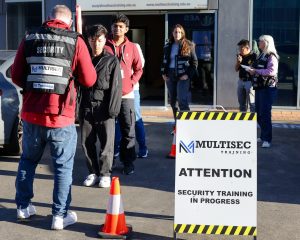
Considering a career in security? Learn how CPP20218 Certificate II in Security Operations, NSW licensing requirements and practical preparation fit together as you plan your next steps with Multisec Training.
Table of Contents
ToggleUnderstanding Security Work in NSW
Security officers work across settings such as commercial buildings, retail centres, residential properties and events. Depending on their role and licence, their duties may include patrolling premises, monitoring access, managing crowd behaviour and responding to incidents.
Effective security work requires clear communication, observation, sound judgement and an understanding of legal responsibilities. Training helps develop these skills and prepares learners for situations they may encounter in the workplace.
Training and Licensing Are Separate Steps
In NSW, you must hold the appropriate security licence before carrying out work that requires it. Security licences are administered by the NSW Police Force Security Licensing & Enforcement Directorate, known as SLED.
For people seeking to work in unarmed guarding or crowd control, the relevant licence subclass is Class 1A Security Officer.
Successfully completing the required training is one part of the application process. Applicants must also satisfy SLED’s eligibility requirements, including age, citizenship or eligible residency or visa status, and criminal history and suitability requirements.
Completing a qualification does not automatically grant a security licence. SLED assesses and determines licence applications.
Security Training with Multisec Training
Multisec Training delivers CPP20218 Certificate II in Security Operations, a nationally recognised qualification covering skills relevant to entry-level security work.
The course covers areas including:
Communicating effectively and providing customer service.
Applying legal, procedural and workplace safety requirements.
Identifying and responding to security risks.
Patrolling premises and monitoring access.
Managing individual and crowd behaviour.
Responding to situations involving intoxicated people.
Using basic defensive techniques to protect yourself and others.
Training and assessment include practical activities designed to develop and assess the required skills. Students must successfully meet the qualification’s assessment requirements before it can be awarded.
Learning and Assessment Arrangements
Contact Multisec Training for current course dates, fees, duration and attendance requirements.
NSW security licence training cannot be completed entirely online. Any online or self-directed learning forms part of the approved delivery arrangements, and SLED-mandated assessments must be completed in a supervised, face-to-face environment.
Steps Towards a Security Career in NSW
1. Check Your Eligibility
Review SLED’s current licensing eligibility requirements before committing to training. Having permission to work in Australia does not, by itself, establish eligibility for a NSW security licence.
If you are unsure about your circumstances, seek guidance from SLED before enrolling.
2. Complete the Pre-Enrolment Process
Speak with Multisec Training about the course and its entry requirements.
The NSW Security Licence Course requires a pre-enrolment assessment, including language, literacy and numeracy requirements. You will also need to provide the required identification and evidence of current first aid training.
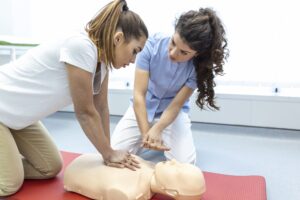
For the Class 1A pathway, the relevant first aid unit is HLTAID011 Provide First Aid. Ask our team about first aid requirements and available training before starting your security course.
3. Successfully Complete Training and Assessment
Participate in the required learning activities and complete the written and practical assessments.
Use this time to develop your communication, observation and decision-making skills, as well as your understanding of the responsibilities and limits of a security officer’s role.
4. Apply for the Appropriate Security Licence
Once you have met the required training requirements, you can apply to SLED for the relevant licence.
The application involves supporting documents, fees and eligibility checks. Licence application fees are separate from training fees, and processing times can vary.
Refer to the NSW Police SLED website for current requirements.
5. Prepare for Job Applications
When seeking employment, prepare a résumé that accurately describes your qualifications, licence status and relevant experience.
Transferable skills from customer service, hospitality, retail and other roles may be useful when applying for security positions. Read each vacancy carefully, as employers may have additional requirements relating to experience, availability or specific duties.
Training does not guarantee employment. Recruitment decisions are made by employers, and opportunities depend on your circumstances and available positions.
Practical Tips for New Security Job Seekers
Keep your résumé and licence details up to date.
Practise explaining how you would communicate calmly in a difficult situation.
Research the duties and working conditions of each position.
Apply for roles that match your licence and experience.
Keep your first aid training current and stay informed about industry requirements.
Check whether specialist roles require additional qualifications or licence subclasses.
Speak with Multisec Training
If you are considering security training in Sydney, our team can explain CPP20218 Certificate II in Security Operations, upcoming course dates, fees and the enrolment process.
Call 1300 756 533 or email enquiries@multisectraining.edu.au to discuss your training options.
Training location: Suite 15, 191 Parramatta Road, Auburn NSW 2144.
Multisec Training | RTO No. 45548 | SLED Approval No. 25/066
Successful course completion does not guarantee a security licence or employment. Separate licensing and eligibility requirements apply.